
Mental Training
Guided audio sessions, multi-day journeys, and mood tracking to build mental resilience for cricket.
Cricket is as much a mental game as a physical one. Yorker's Mental Training section is a library of guided, narrated sessions that help you develop the psychological skills that separate good players from great ones.
Guided sessions
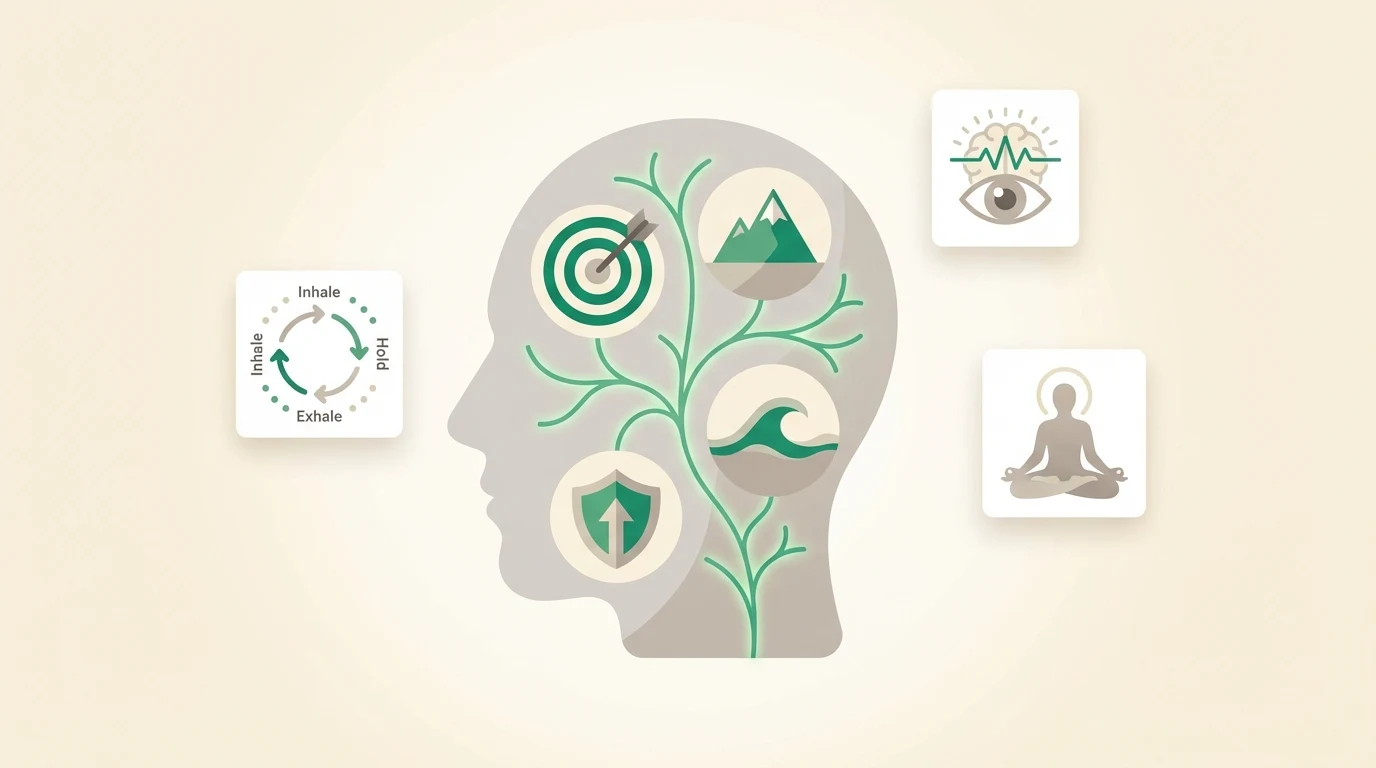
The heart of Mental Training is 16 guided session types, each with audio narration and calming breathing visuals. You follow along step by step — the session guides you, pauses for reflection, and asks for your input where it matters. Sessions run 5–12 minutes.
They are organised into four categories:
- Pre-Match Zone — Prepare your mind for peak performance: match day visualization, building your pre-match routine, replaying your highlight reel, and confidence building from real evidence in your own cricket
- Pressure Lab — Build psychological immunity through exposure: graduated pressure training, performing despite anxiety, recovering from emotional hijacks (a dropped catch, a bad decision), and defusing fear of failure
- Resilience & Recovery — Process, release, and return stronger: post-match debriefs, separating controllables from uncontrollables, and a pre-match sleep protocol
- Mental Foundations — Core skills that underpin everything else: tactical breathing, the 10-second reset routine, attention cycling for long innings, and motivational and instructional self-talk
Each session card shows the science behind it — the framework it draws on, a citation, and who uses it — so you know the techniques are grounded in sport psychology research, not guesswork.
Journeys
Journeys are multi-day structured programs that sequence individual sessions into a progression — complete them in order for best results. Each journey shows its science basis, tracks your progress with a completion bar, and highlights the next session to do.
Playbook
The Playbook is your quick-reference library of mental techniques — compact reminders of the routines and cues you have learned in sessions, ready to review before a match without running a full session.
Daily check-ins and recommendations
A short daily check-in (confidence, energy, stress, sleep quality) steers what Yorker recommends. High stress points you to tactical breathing; low confidence to the confidence builder; poor sleep to the sleep protocol. Check in each day and the "today" recommendation adapts with you.
History
The History tab is your mental training record:
- Mood trends — Every session logs your mood before and after, charted over time so you can see what actually works for you
- Streaks and milestones — A streak calendar and milestone badges track consistency, plus a weekly 7-day tracker
- Replay — Expand any past session to re-read its script and your reflections, or replay the full guided session
- Delete controls — Delete any individual session, or use "Delete All Mental Training Data" to permanently remove every session, journal response, and mood entry in one action
Chat companion — Mental mode
The AI coach's Mental focus mode (in Ask AI) is the conversational companion to guided sessions. Use it to talk through a specific challenge — a run of low scores, nerves against fast bowling, a confidence dip — and get tailored advice, self-talk scripts, and technique explanations. When a full guided session would serve you better than a conversation, the coach will point you to the Mental Training page, and chat suggestions include a shortcut to start a guided session directly.
Not therapy — and where to get real help
Mental Training provides sports performance coaching techniques: visualization, breathing exercises, focus training. It is not therapy or mental health treatment, and you will be asked to acknowledge this before your first session. If you are experiencing persistent distress or mental health difficulties, please contact a qualified professional. In India: iCall 9152987821 (Mon–Sat, 8am–10pm) or Vandrevala Foundation 1860-2662-345 (24/7).
Session allowance by plan
| Plan | Mental training |
|---|---|
| Free | 4 guided sessions/month |
| Pro | Full library — every session type and journey |
| Elite | Full library + a personalised mental spine (Match Week Protocol and periodized programs) |
Tip: Mental training is most effective when practised regularly, not just before matches. One to three quality sessions spaced across the day beats stacking many short ones.