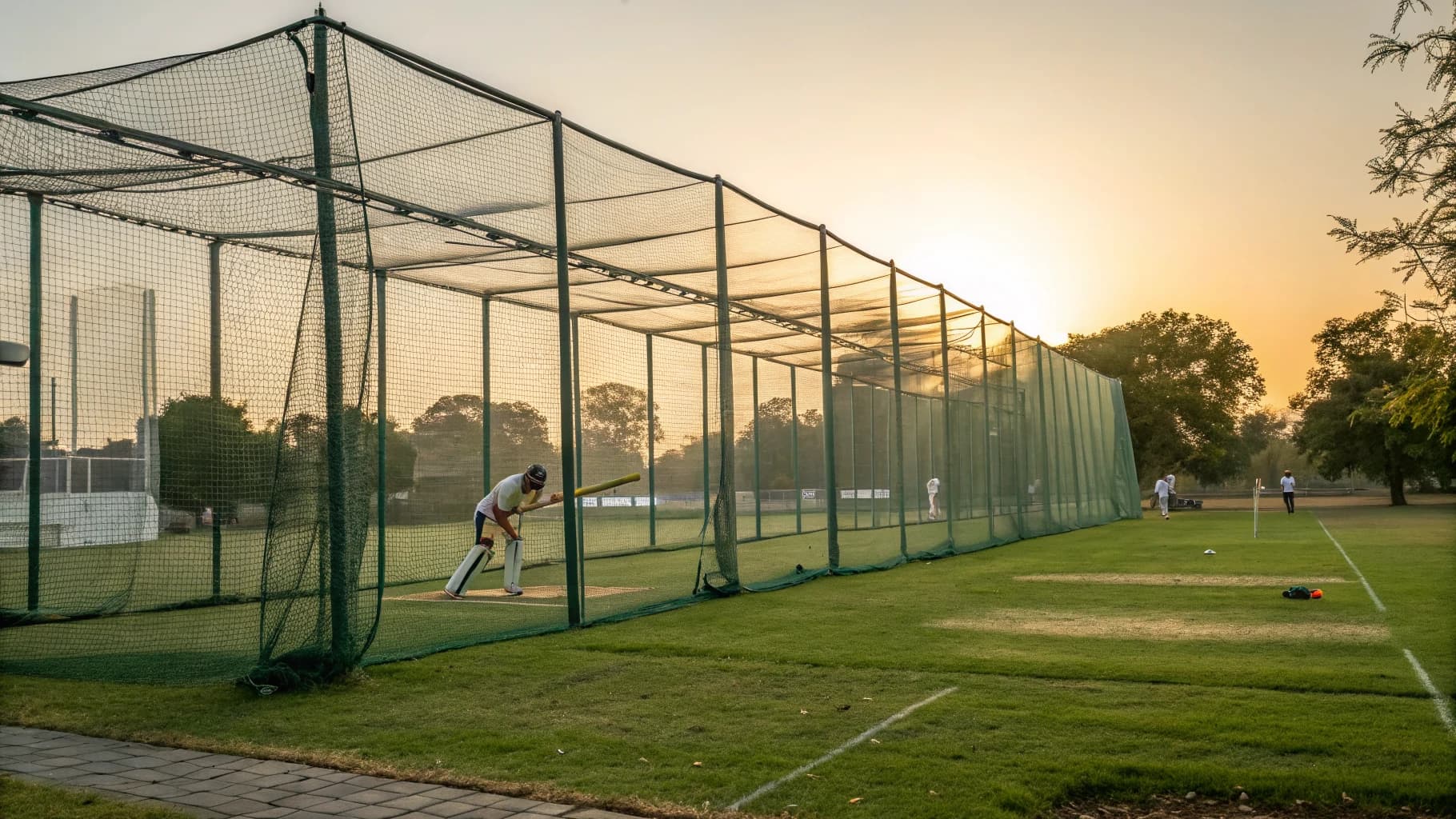
Cricket coaching has always been an art passed down through generations. From the dusty maidans of Mumbai to the manicured ovals of Melbourne, coaches have relied on trained eyes, years of experience, and an intuitive feel for the game. But a quiet revolution is underway, one that augments human expertise with the precision of artificial intelligence.
The Problem with Traditional Coaching
A club coach working with 15 to 20 players in a two-hour net session has roughly six minutes per player. In that time they must observe technique, diagnose faults, suggest corrections, and track progress. The human eye, however experienced, can only follow so many variables at once. Did the batter's front elbow collapse on that cover drive? Was the bowler's front foot landing a fraction too wide? These micro-details often go unnoticed, especially at grassroots levels where coaching resources are stretched thin.
This is where AI steps in. Not to replace the coach, but to become a tireless second pair of eyes.
Computer Vision Meets the Cricket Ground
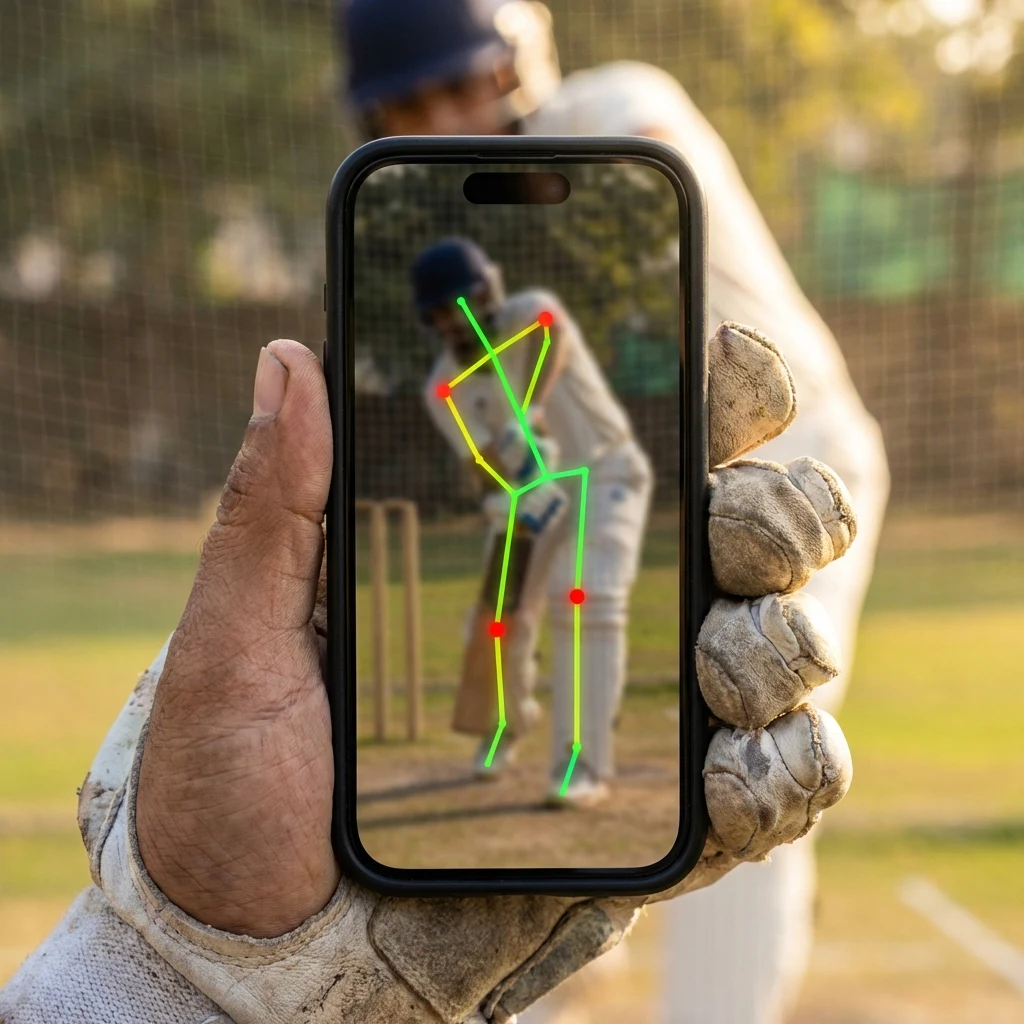
Modern pose analysis uses computer vision to track a player's skeletal landmarks in real time. When a batter plays a cover drive, the system identifies key body points: wrists, elbows, shoulders, hips, knees, and ankles. It measures joint angles, tracks movement paths, and compares them against biomechanical benchmarks.
Take the cover drive, widely regarded as cricket's most elegant stroke. A well-executed one needs the front shoulder to lead, the head to stay still and over the front knee, the bat to swing through in a full arc with a high elbow, and the weight to transfer smoothly onto the front foot. A coach might say "your elbow is dropping." AI can be more specific, putting a number on the lead elbow angle at contact and comparing it to the range associated with clean ball striking.
From Bowling Actions to Fielding Drills
The applications reach well beyond batting. For fast bowlers, AI can analyse the whole kinetic chain, from the approach to the follow-through, and help flag a suspect action by estimating elbow extension. Spin bowlers benefit from wrist analysis at release, where the difference between a leg break, a googly, and a top-spinner is decided in a fraction of a second. Even fielding has entered the AI era, with platforms studying reaction time, first-step quickness, and throwing mechanics so coaches can design targeted drills instead of generic sessions.
Personalized Training Plans
Perhaps the most transformative aspect of AI coaching is personalization. Traditional coaching often follows a one-size-fits-all approach: everyone does the same drills in the same order. AI-powered platforms like Yorker analyse each player's strengths, weaknesses, and learning patterns to build individual training plans.
A 14-year-old aspiring opener in Chennai might get a very different sequence from a 28-year-old middle-order player in London, even when both work on the same fundamental skill. The plan accounts for current technique, physical attributes, the conditions each player will face, and their pace of learning.
Language Models as Coaching Assistants
Beyond computer vision, large language models add another dimension. Players can ask questions in plain language, such as "Why do I keep getting bowled playing across the line?" or "How should I adjust my grip for outswing?" and receive clear, detailed answers drawn from coaching literature, match data, and biomechanical research.
These assistants can explain a concept in several ways, adapting to the player's age and experience. A junior cricketer asking about keeping a still head at the crease gets a different explanation from an experienced club player exploring the same idea.
The Data Flywheel
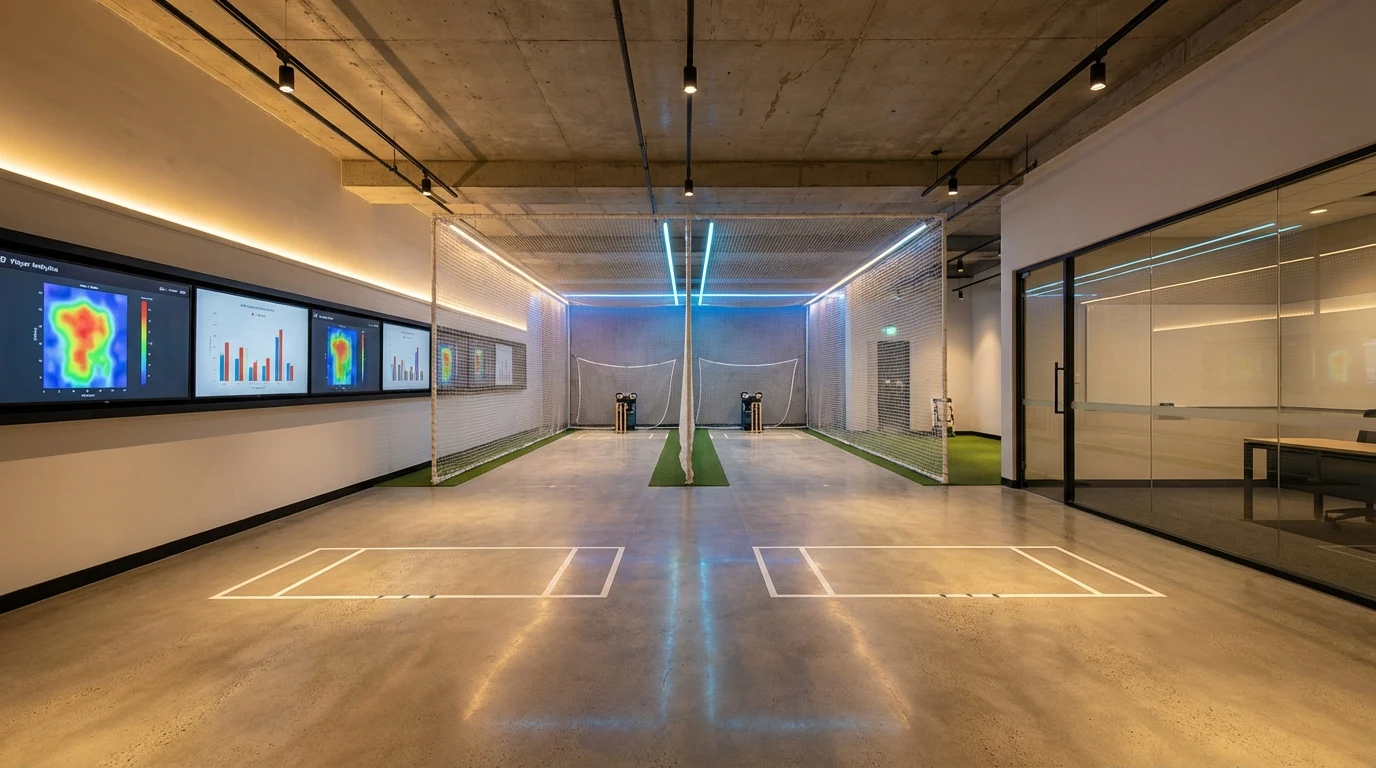
What makes AI coaching stronger over time is the data flywheel. Every session generates data, and every analysed frame sharpens the system's sense of what works, from spotting patterns to flagging injury risk. That matters in cricket, where technical refinement can take months or years. AI can track small improvements a coach might miss over a few weeks, giving the player evidence that the work is paying off.
The Human Element Remains Central
AI is not replacing cricket coaches. The best coaching involves mentorship, motivation, tactical awareness, and emotional intelligence, qualities that stay firmly human. What AI does is free the coach from constant observation, so they can focus on strategy and the player relationship.
The future of coaching is not AI versus human. It is AI and human together, combining computational precision with cricketing wisdom to develop better players at every level.
What This Means for You
Whether you are a parent enrolling a child in their first clinic, a club cricketer ironing out a flaw, or a coach trying to make the most of limited net time, AI-powered coaching is a genuine step forward. Technology once reserved for international teams with huge budgets now fits on a smartphone.
The revolution is here. The nets have gone neural.